
Saturday, 30 May 2020
Common Blue butterfly
Whilst walking in along the grassy field edge near the Old Railway Cutting, Andy M spotted two 'small blue' butterflies this week. The underside had the rows of black,white and orange spots typical of several 'Blues', and the upper side was a lovely graduation of brown and blue. Typically, the upper side of the Common Blue butterfly is either blue (males) or brown (females), but there is apparently some variation in the females from largely blue to largely brown, or as in this case somewhere in between.


Broad Bodied Chaser
Derek T spotted a female Broad Bodied Chaser, a species of dragonfly, in his garden this weekend.


Monday, 25 May 2020
Thick-legged Flower Beetle
A rather striking, green iridescent beetle can be seen on Phacelia flowers at the moment - the aptly named Thick-legged Flower Beetle - showing off some rather special bulbous legs!


Oxeye Daisies in profusion
Andy M could hardly fail to notice that virtually every bank and meadow on the LSA is completely covered in Oxeye Daisies at the moment.


Hirundines around the village
A number of Swallow could be seen swooping low over the barley fields this weekend, and the House Martin are busy around their nests on the school and shop.


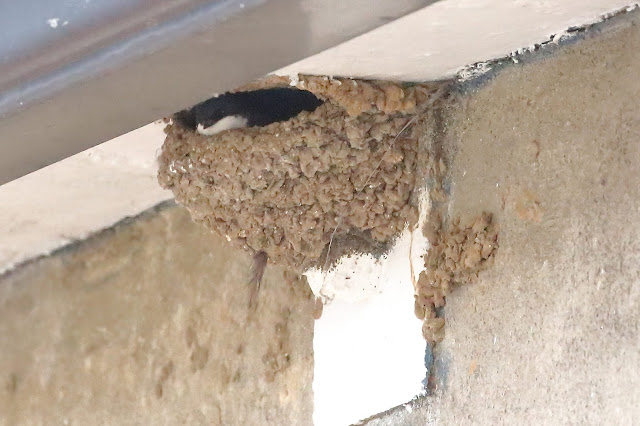

Swallows feeding low over the fields, near Cambridge Road


House Martin clinging to the school wall
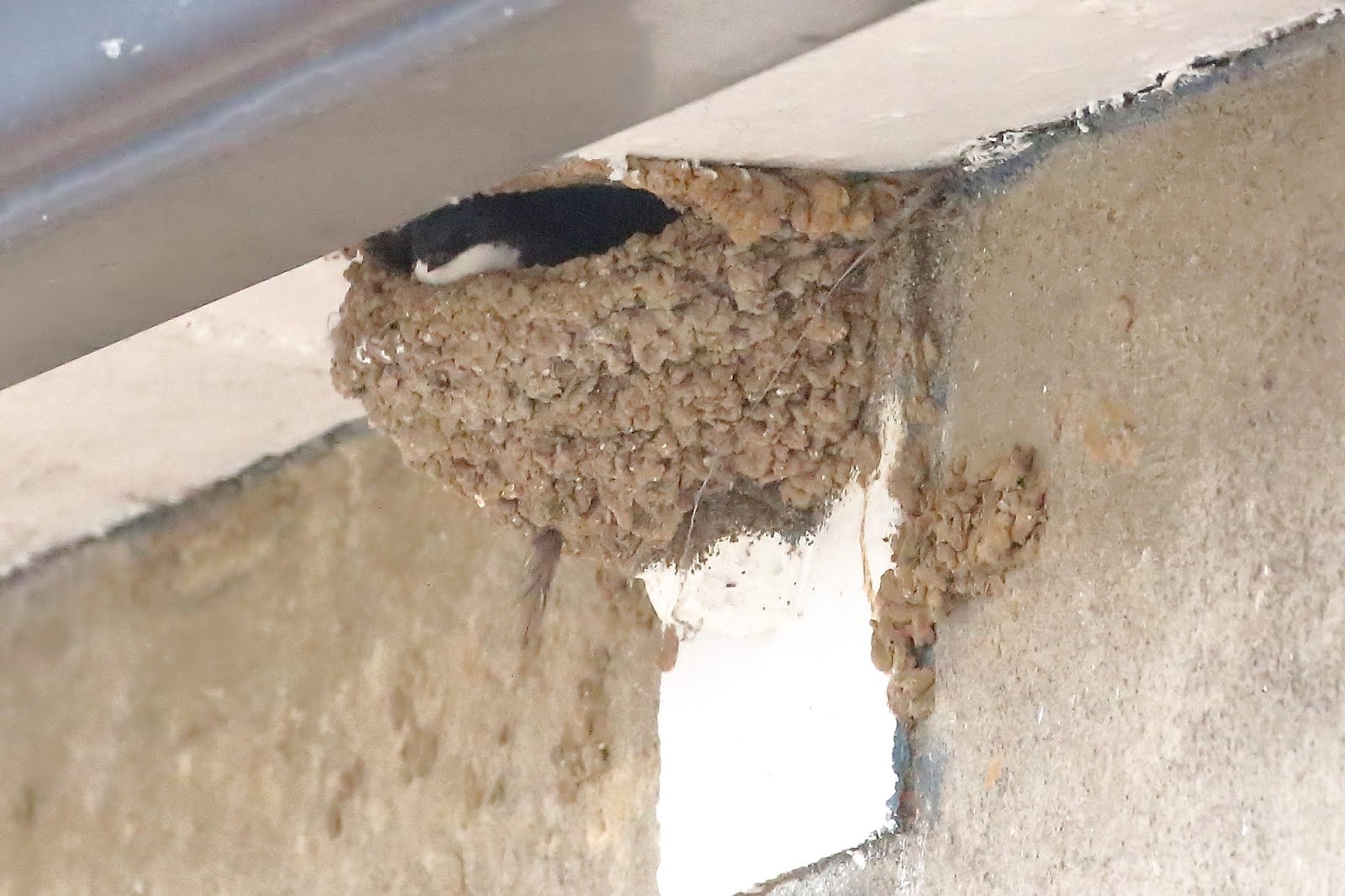
House Martin in the nest on the school
Ermine Moth caterpillars
Andy M noticed that the Spindle Trees were covered in webs this week, and that their leaves had been almost entirely consumed by Ermine Moth caterpillars, which were dropping themselves out of the trees on long strands of silk.


Flowers near Hildersham Wood
Along the path near Hildersham Wood, the field edge has been sown with a lovely mixture of flowers and Andy took a few photos on his walk up there this weekend.


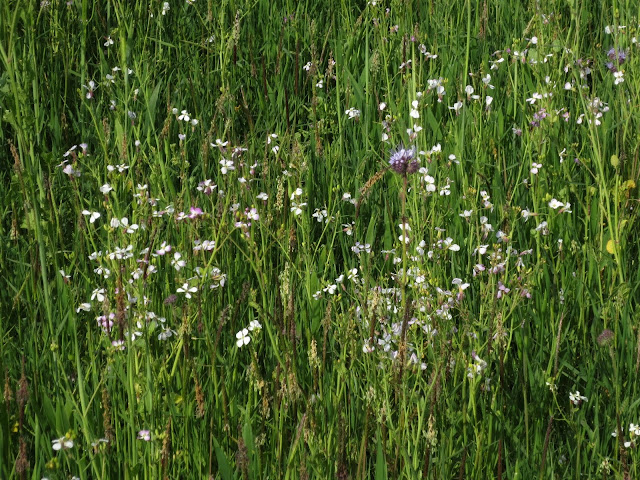


Phacelia

Flower mixture

Lady's Smock

Crimson Clover

A Vetch (maybe Tufted Vetch?)

Lady's Smock

Cut-leaved Cranesbill
Subscribe to:
Posts (Atom)