Sunday, 7 February 2021

RSPB Big Garden Bird Watch

As has been the case for over forty years, the RSPB Big Garden Bird Watch took place over the last weekend of January, this year from Friday 29th to Sunday 31st.

ANW members once again sent their local Abington garden results to Derek, who collated the results below.  An impressive total of 22 reports were received this year, up from 15 reports in 2020, and collectively a total of 30 bird species were seen this year!

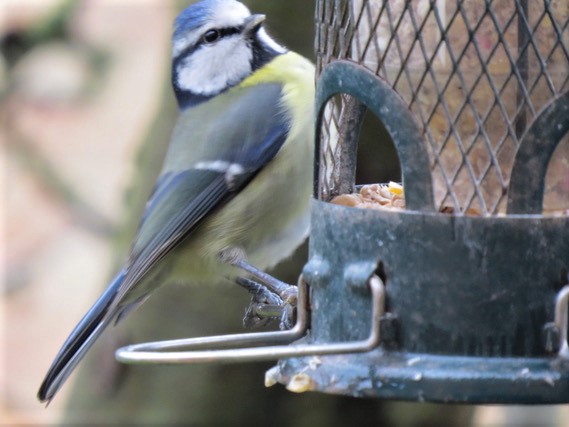
'Top spots' of the 2021 BGBW were: 1st - Blue Tit; 2nd - Woodpigeon; 3rd - Robin; 4th - Blackbird.

Compared to the ANW BGBW in 2020, a few species were seen in 2021, but not in 2020: Fieldfare, Jay, Redwing, Reed Bunting and Stock Dove.  Conversely, several species seen in 2020 were absent from this year's list: Black-headed Gull, Green Woodpecker, Kestrel and Nuthatch.  In all instances, these species were only reported by 1 or 2 people, so whilst these species may have been around in both years, they are perhaps less common and so less likely to be seen during any given hour of watching. 

More interestingly perhaps, is the relative percentage of reports that record each species, since this may be a better indicator of the general abundance of each species. Several species were seen less commonly this year, most noticeably: Chaffinch, Coal Tit, Collared Dove, Dunnock and Sparrowhawk. Some species however appear to have been seen much more often in 2021, including Blue Tit and Great Spotted Woodpecker. 

Many thanks to everyone who took part.  Some concerns were expressed that we saw fewer birds than normal this year, but hopefully everyone enjoyed taking part.  Once the full results are published by the RSPB, it will be interesting to see how our our Abington results compare with those across the county and country this year.


January 2021 - Interesting sightings from around the Abingtons

January 2021

Amphibians and Reptiles

Gaynor Farrant has kindly agreed to become the new ANW Recorder for these species. Please email her any sightings, particularly as they start to emerge from hibernation over the coming months.


Birds

A total of 872 sightings, including 44 different species were received this month – a number boosted by the RSPB Big Garden Bird Watch which took place during the last weekend of the month.

RSPB BGBW – an impressive total of 22 reports were received, spotting 30 different species.

Fieldfare – 10 reports, mostly of 1-4 birds on the ORC and LSA, but also a flock of c30 on Perse sports fields. Redwing – flocks of 10-30 seen in hedgerows right across the villages, including GP, ORC, LSA, Abington Woods and Cambridge Rd - a notable increase in sightings, with 19 reports mostly from in second half of the month.

Common Gull – small numbers spotted amongst larger flocks of Black-headed Gull (50-200), on GP cricket field and Perse sports fields, and following the plough in fields along Bourn Bridge Road.

Song Thrush – after an apparent absence of some months, 17 reports of birds singing, and feeding in gardens and on the LSA and ORC.  Wren – a few reports of 1-2 birds, similarly being seen and heard again in gardens this month.

Reed Bunting – unusually, seen again under feeders in one particular garden in Lewis Crescent, as was the case at the same time last year.

Blackcap – a pair seen on several occasions taking seed from feeders in Lewis Crescent, and a male on the ORC.

Skylark – several reports of up to 20, singing and displaying in loose flocks near AbPkFm.  Meadow Pipit – flock of 11 feeding in fields adjacent to Tom’s Wood. Pied Wagtail – flock of 12 feeding on GP cricket field.

Goldfinch – reports of good numbers (up to 23) at some feeders, alongside 4-8 Greenfinch and 2-6 Chaffinch, both seen more regularly this month. Blue Tit and Great Tit also reported widely, and Long-tailed Tit more occasionally.  A single Coal Tit and Goldcrest continue to be seen occasionally in a Cambridge Road garden.

Dunnock and Robin – 1-2 regularly in gardens, with both species occasionally heard singing.

Collared Dove – groups of 2-6, but up to 14, commonly seen under bird feeders, as were increasing numbers of Stock Dove (4-6). Both Magpie (1-2) and Jay (1-3) being reported more frequently around garden feeders at several locations.

Great Spotted Woodpecker – 1-2, both male and female, seen most days at some feeders, and a few reports of Green Woodpecker, mostly in the fields adjacent to Church Lane.

Barnacle Goose – several reports of 4-6 feeding on GP cricket field, and flying over Sluice Wood. Grey Heron – 2 feeding in the flooded meadows between the churches.  Mallard and Moorhen – also seen on the flooded river meadows, as well as along the river and on GP lake.

Kestrel, Sparrowhawk and Buzzard – 1-2 seen at several locations around the villages. Red Kite – three reports of a single bird over both the LSA and Bourn Bridge Road.


Butterflies, Bees and other insects

Two reports, both at the end of the month.

a Harlequin Ladybird - in a house.

a Seven-spot Ladybird - on a shrub in garden.


Mammals

Fox – four spotted in Granta Park on 15th, one along the ORC on the 17th, and one in Cook’s Field on 28th.

Muntjac – one in Sluice Wood on 24th, one in Cambridge Road on 28th, and three on ORC on 31st.


Flora & Fungi

Aconite and Snowdrop in flower at several sites including Sluice Wood.


Rivercare

No organised activities in the river or litter-pick as all suspended due to lockdown. The team however, continue to work individually. There was a fair amount of flooding (the worst for several years), with some individual efforts from the team to clear trees and debris arriving by river.

Two of the team attended an online discussion about an EU initiative quantifying plastic waste pollution, carried by rivers to the ocean. The Great Ouse is the largest and most northern catchment being studied, and the only one not flowing directly into the English Channel. An attendee from Linton reported some quite bad littering there, and since we see less downstream in Abington, they seem to do a good job!


Weather

The rainfall in January totalled 83.5 mm, with the lowest recorded temperature being minus 4.7 C on the 25th and the highest 14.5 C on the 28th. However, we had several cold snaps during the month, so overall a more ‘normal’ January. One really windy spell during the 3rd week, but otherwise fairly calm.


Many thanks to all those who contributed reports of their sightings for January 2021:
Barry Brooks, Peter Brunning, David Farrant, Gaynor Farrant, Jennifer Hirsh, Andy Merryweather, Gill Smith, Maggie Turner, Derek Turnidge, Sally Turnidge – and all those reporting in the BGBW.
 
Please email your sightings, within the Abington parishes, to the relevant ANW Recorder:
Amphibians & Reptiles    Gaynor Farrant         
      gaynorfarrant198@btinternet.com
Birds:                               Derek Turnidge               derek@turnidges.com
Butterflies, Bees etc:       Jennifer Hirsh                  jennifer@hirsh.com
Mammals:                        Gill Smith                        richardandgill.smith@live.co.uk
Flora recorder currently vacant - if interested, please contact David Farrant for more details.
 
Abbreviations: GA – Great Abington, LA – Little Abington, LSA – Land Settlement Association, GP – Granta Park, ORC – Old Railway Cutting. AbPkFm – Abington Park Farm.

Sunday, 31 January 2021

If you have a pond, even a small one ... read on!

Gaynor F recently kindly agreed to be the new Amphibians and Reptiles recorder for Abington Nature Watch, so if you have a pond - however small - please keep a look out for the first signs of these lovely creatures coming out of hibernation.

Gaynor has included a hints of what to look for:

Now is the time to start looking for signs of frog and toad spawn, which can be found in ponds from late January, and into February and March. Frog spawn is always laid in clumps whereas toad spawn comes in long chains, usually draped over pond weed and submerged plants.

Also look out for the adults. Generally around the Abingtons, we could spot quite a number of amphibian species, including and two species of frog, one toad species, and two species of newt: 

Common Frog is about 9 cm (3.5 in) long, green or brown with irregular dark blotches on the back and behind the eye. 

Pool Frog is also about 9 cm (3.5 in) long, although the males are usually a little smaller, and are dark-brown with a yellow stripe down the middle of the back.  

Common Toad is about 8 cm (3 in) long with warty skin which is shades of brown, green or grey and the belly is often pale with dark speckles. 

Common Newt (or Smooth Newt) is about 8-11 cm (4 in) long, grey-brown on top with an orange belly, and black spots all over. Males have a smooth crest running down their body and tail, in the breeding season.

Great Crested Newt is larger, being up to 17cm (6-7 in) long, having almost black warty skin, with spotted flanks and a striking orange belly. Like the Common Newt, males also have a long wavy crest running along their body and tail during the breeding season.

The Suffolk Wildlife Trust has a useful website with more details: LINK

Please do let Gaynor know if you see any of these adults or spawn, or any other amphibians and reptiles, including where, when and how many you see.  

     Gaynor Farrant email: gaynorfarrant198@btinternet.com


Contact details for all ANW recorders can be found here: ANW CONTACTS

A good day for the RSPB Big Garden BirdWatch

David F was up with the lark this morning, and witnessed this lovely sunrise.  

Being a great improvement on the weather yesterday, it's turned into a good day to watch the birds, and to take part in the annual RSPB Big Garden Bird Watch.  David has already noted a few good species on his feeders!  And Barry B took some great photos of the birds visiting his garden.

If you do take part, don't forget to also send Derek your bird count for Abington.


A lovely sunrise this morning

Great Spotted Woodpecker (male) and Goldfinch [photo David F]

Several more Goldfinch, and a Great Tit [photo David F]

[all the following photos from Barry B]
Blue Tit

Blue Tit
Long-tailed Tit and Blue Tit
Dunnock
Dunnock
Jackdaw
Robin
Robin

River level high and flooding again

Thursday 28th January 2021

After another spell of heavy rain, the river level again rose rapidly and was very high just prior to the weekend. It burst its banks once again into Lagden's Grove and Cook's Meadow, and to the west of Bourn Bridge.  

On the Hildersham side of the A1307, Andy M had to wade through fields to the Hildersham footbridge, where the river had flooded both sides, the levels in the fields rising while he watched!

The view east from Bourn Bridge, showing flooding again in Lagden's Grove and Cook's Meadow
[photo Barry B, 28th Jan]
 
The view west from Bourn Bridge, towards the A11
[photo Barry B, 28th Jan]

Footpath to Hildersham, from just over the A1307
[photo Andy M, 1pm 28th Jan]

Looking back towards Abington from Hilda's Wood
[photo Andy M, 1pm 28th Jan]

Hildersham footbridge - almost on its own island!
[photo Andy M, 1pm 28th Jan]

Wednesday, 27 January 2021

A pair of Blackcap

In his garden today, Andy spotted a pair of Blackcap, feeding and sheltering together in a bush close to the house. As might be expected from its name, this warbler has a distinctive black cap - but only in the case of the male, the female having a lovely rufous brown cap.

Not often seen in the garden, Andy's hoping they are still around to be counted as part of the RSPB Big Garden Bird Watch this coming weekend!

Male Blackcap - with a black cap!

Female Blackcap - with a rufous brown cap


Sunday, 24 January 2021

A few garden birds

The cold weather and snow has brought a few more birds into gardens recently.  Mervyn W noted a male Reed Bunting was again feeding in his garden, as was the case this time last year - quite an unusual garden visitor!  

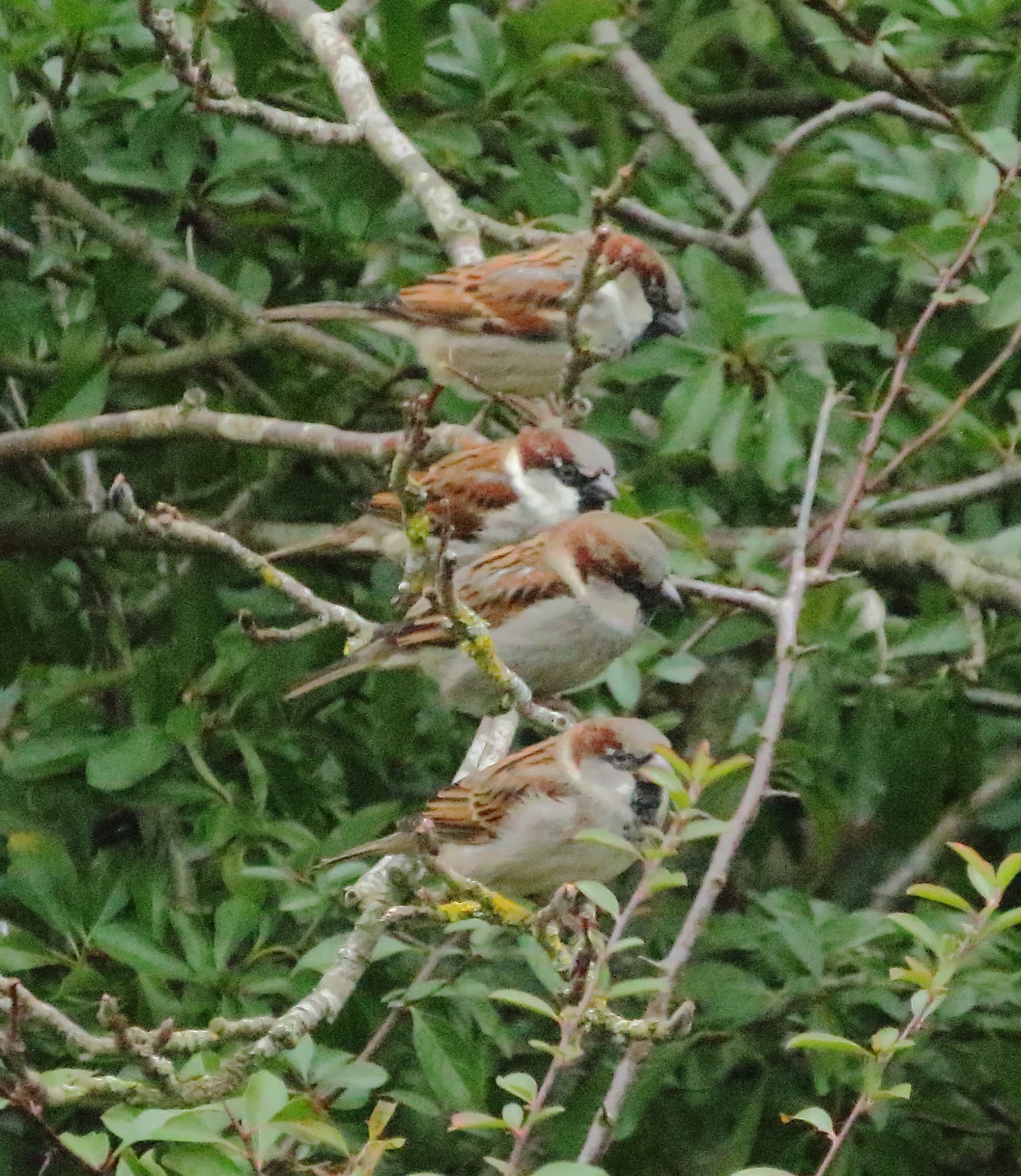
Similarly, a pair of Jay, normally quite shy birds, have become regulars in Andy M's garden, feeding on the seed dropped by the rather messy male Great Spotted Woodpecker. And after the recent snow, one Jay even ventured up to the feeders close to the house. The House Sparrow colony is also becoming more evident, especially if there's the faintest hint of sun!


A pair of Jay, have become quite regular visitors to the garden feeders now.


A male Great Spotted Woodpecker


A Jay, venturing quite close to the house to feed on dropped seed


A male House Sparrow line-up

The Aims of Abington Naturewatch

At their meeting on 9 April 2005 the members approved this revised version of the aims of Abington Naturewatch:

  • To monitor and record the wildlife (fauna & flora) within the borders of the Abingtons;
  • To encourage protection of our wildlife, maintain its quality and foster its diversity;
  • To promote awareness of the richness, potential and problems of the natural environment of the Abingtons;
  • To cooperate in improving access to the local natural environment for the benefit of all Abington villagers.

Pat Daunt, Founder

The organisation is informal and communication is by email if possible; members are notified of events from time to time. Contact details are maintained by a small "project team". There is currently no membership fee as costs are covered by voluntary contributions at events.

Members are encouraged to report notable sightings of flora and fauna within the Abingtons to the appropriate sector coordinator and an illustrated record is published annually.

A map of the area covered, with some features noted, is available here: http://maps.google.co.uk/maps/ms?ie=UTF8&hl=en&msa=0&msid=213774935674882866424.00000111dca2be9f06ab8&z=13>

For more information or to join, please contact David Farrant on (01223) 892871.

Contributions to our records should be sent to sector contacts or either of the above. Photographs may also be submitted to Andy Merryweather (amerryweather61@gmail.com)